Postpartum Nutrition: The Stage No One Prepares You For
When we talk about women’s health, most of the conversation stops at pregnancy.
But postpartum is often when women feel the most depleted.
The appointments slow down. The support fades. The attention shifts to the baby. Meanwhile, a mother’s body is healing from birth, navigating one of the most dramatic hormonal shifts of her life, rebuilding nutrient stores, and often producing breast milk all while sleeping in fragments.
Postpartum is not a return to normal. It is a rebuilding phase.
The Hormonal Drop After Birth
Immediately after delivery, estrogen and progesterone levels fall sharply. According to the American College of Obstetricians and Gynecologists, these rapid hormonal changes can significantly affect mood and overall well-being in the weeks following birth.
Add sleep deprivation which research from the National Institutes of Health shows can impair glucose regulation and you have a body under real metabolic strain. Nutrition does not eliminate this stress. But it can support stability.
Why Protein and Fiber Matter So Much
After birth, the body is repairing tissue, rebuilding blood supply, and recalibrating hormones. Protein supports that process directly. The Dietary Guidelines for Americans emphasize increased protein needs during lactation to support recovery and milk production.
Fiber plays an equally important role. Adequate fiber intake has been associated with improved glucose regulation and metabolic health.
Stable blood sugar means steadier energy. And steady energy matters deeply in postpartum.
Yet most women are under-consuming both protein and fiber especially when meals become irregular and exhaustion sets in.
Replenishment, Not Restriction
Pregnancy draws heavily from nutrient reserves, including folate and iron. Folate remains important postpartum for cellular repair and red blood cell production.
This stage is not about dieting. It is about rebuilding.
And rebuilding requires nourishment that is consistent and practical.
Why We Considered Postpartum When Formulating OVU
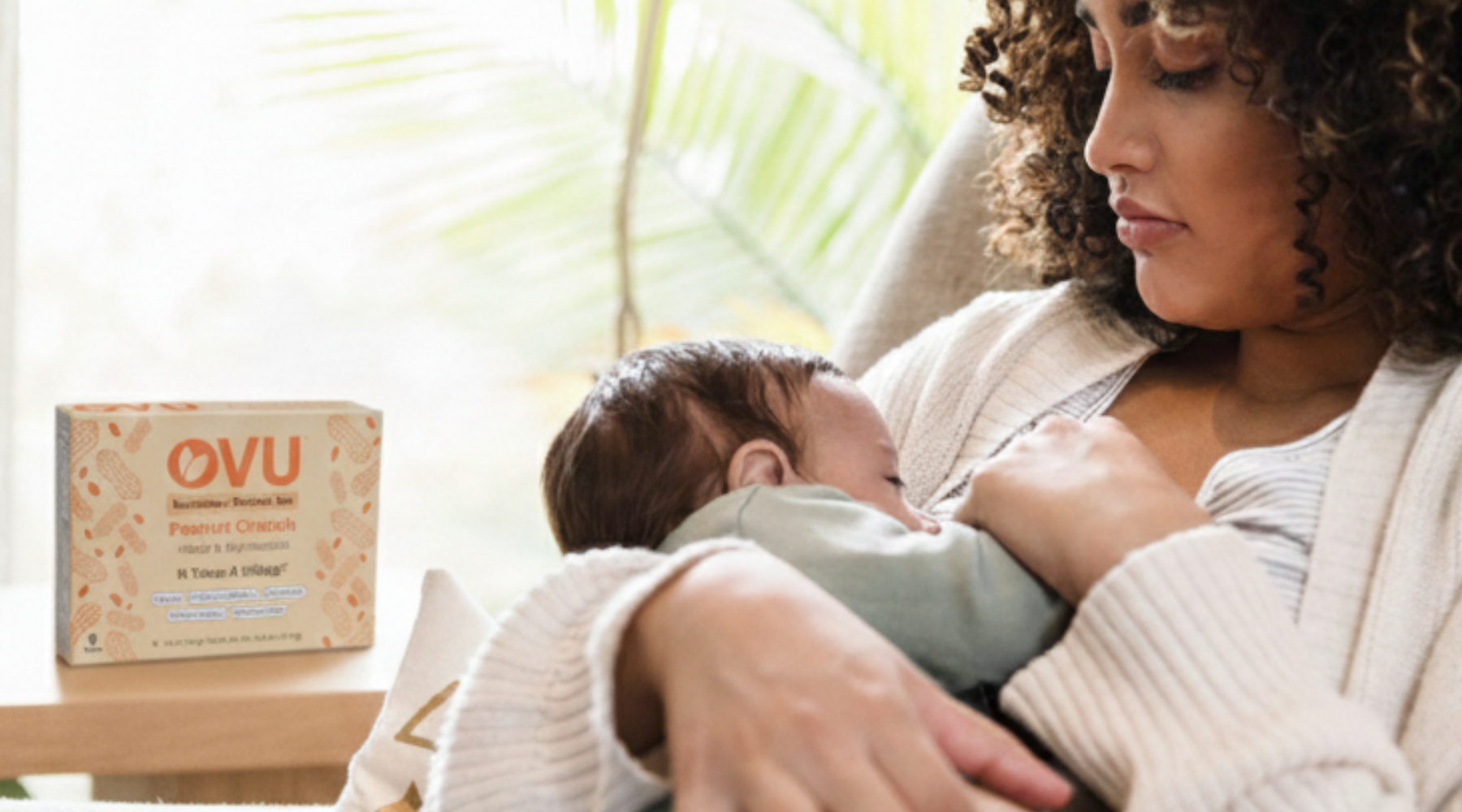
OVU was created to support women across fertility, pregnancy, and postpartum because hormonal health does not end at delivery.
Each bar provides 10 grams of protein, 8 grams of fiber, 0 grams of added sugar, and 100 percent of the daily value of folic acid, alongside myo-inositol and maca root within a Mediterranean-inspired ingredient framework.
They are not meant to replace meals. They are designed to support blood sugar stability and provide meaningful nutrients in moments when time and energy are limited.
Postpartum Is a Rebuilding Season
There is no timeline for “bouncing back.”
There is only healing.
Women deserve thoughtful, consistent nourishment during this stage not just survival.

Abigail Modell, Founder